Jan 2026 – Current (Seoul)
Dipin – AI-based Talent Evaluation Platform
An AI-based talent evaluation platform that assesses real-world problem-solving skills through scenario-based tasks and structured evaluation reports.
Overview
Dipin is an AI-powered hiring platform that evaluates candidates through realistic, scenario-based tasks instead of traditional resume screening. Candidates complete practical tasks while the platform collects code submissions, interaction data, and AI prompt logs to support the evaluation process.
The platform aims to provide more objective hiring insights by capturing candidates' problem-solving activities throughout the assessment.
Tech Stack
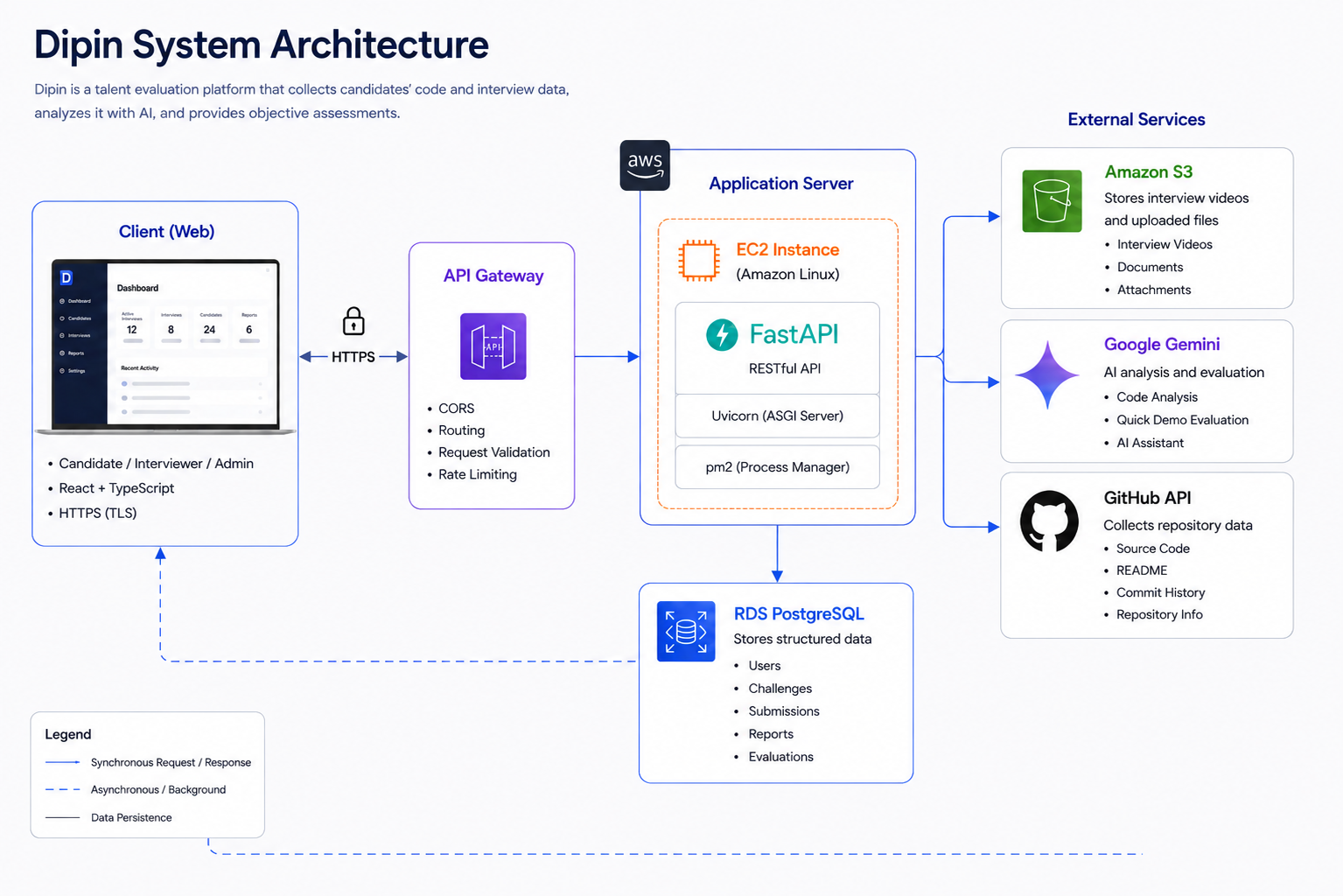
Architecture Diagram
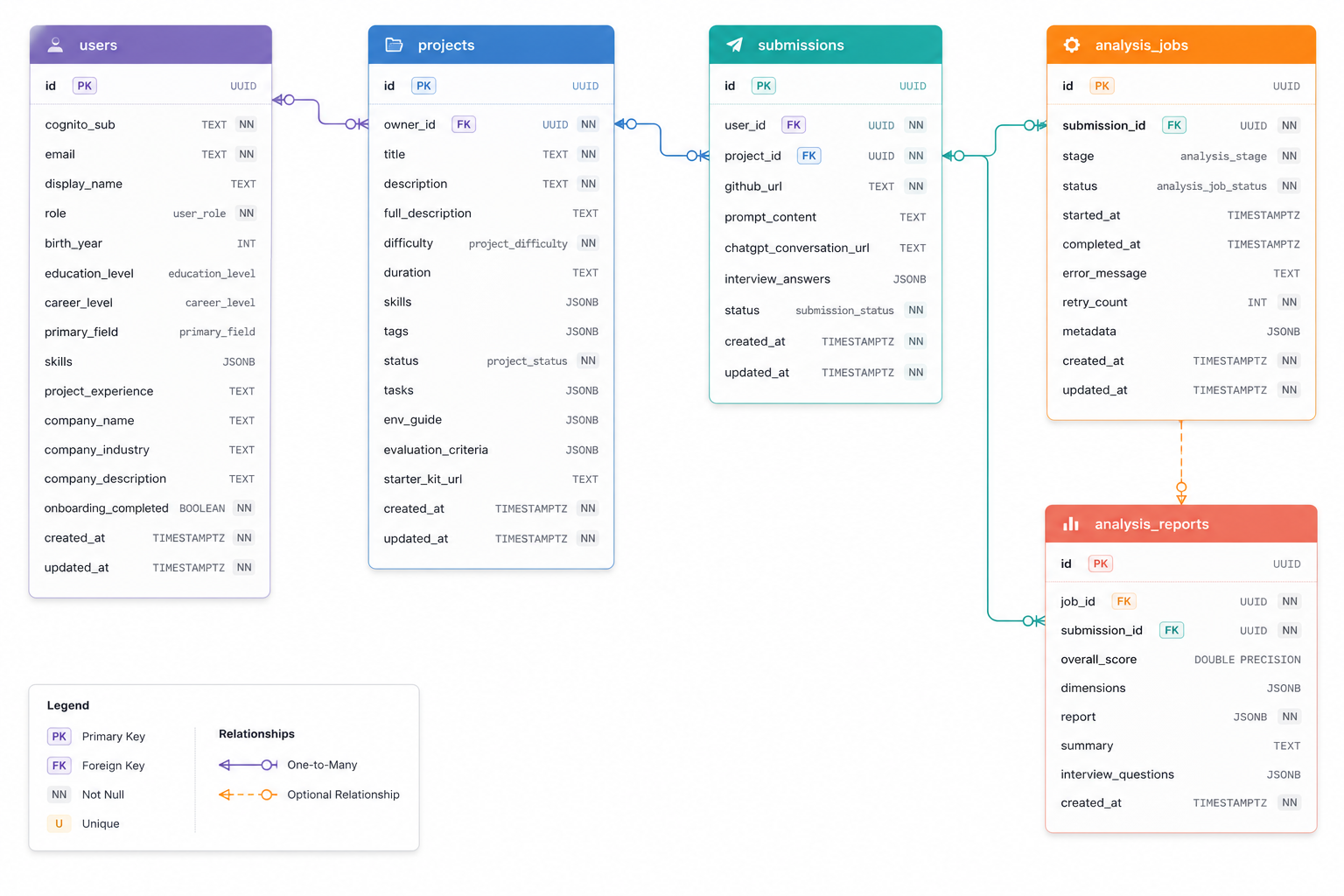
ERD
Workflow
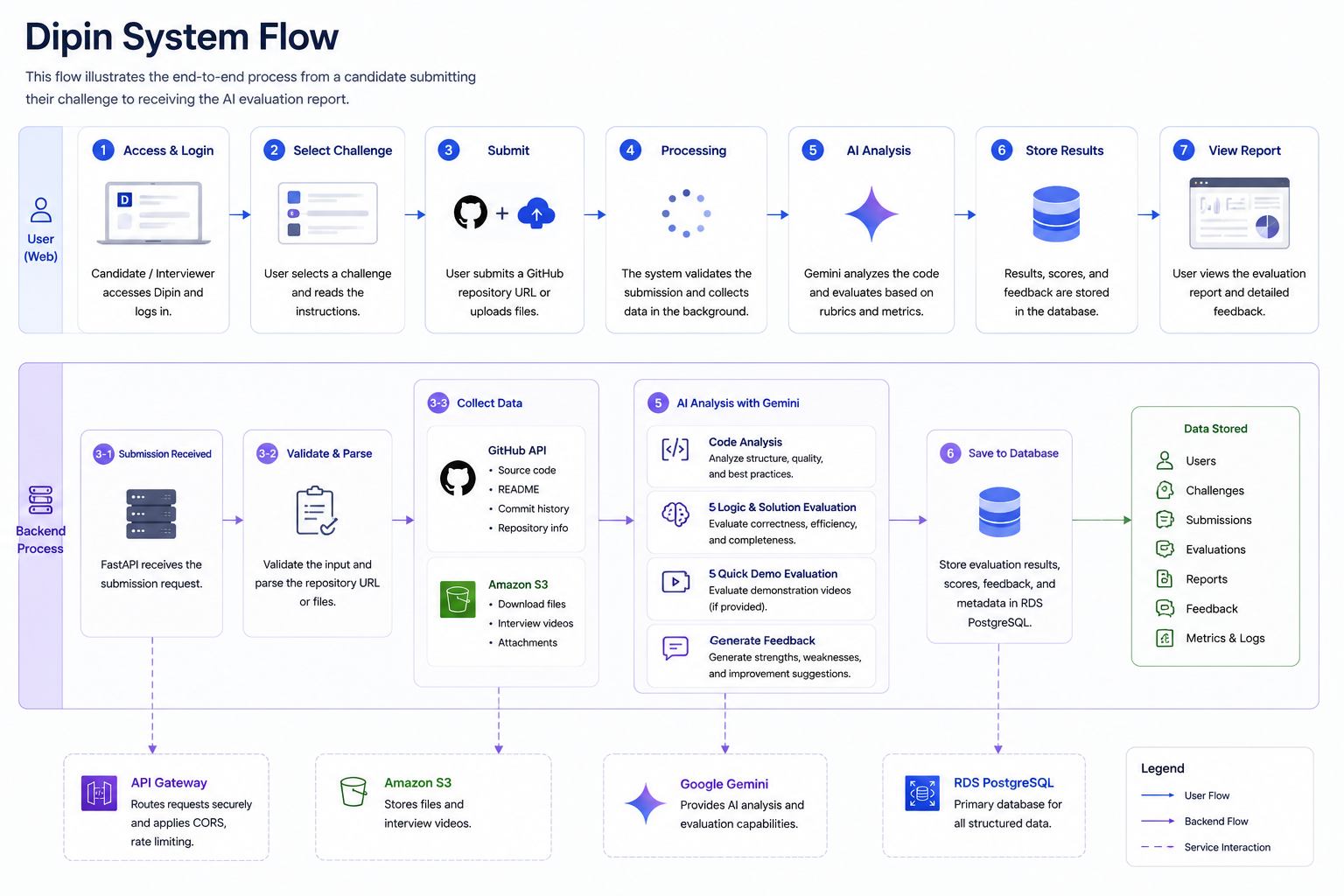
- Candidates complete scenario-based assessment tasks.
- The frontend captures user interactions, code submissions, and prompt logs.
- Backend APIs process and store the collected data.
- The collected data is used by the evaluation system to generate assessment results.
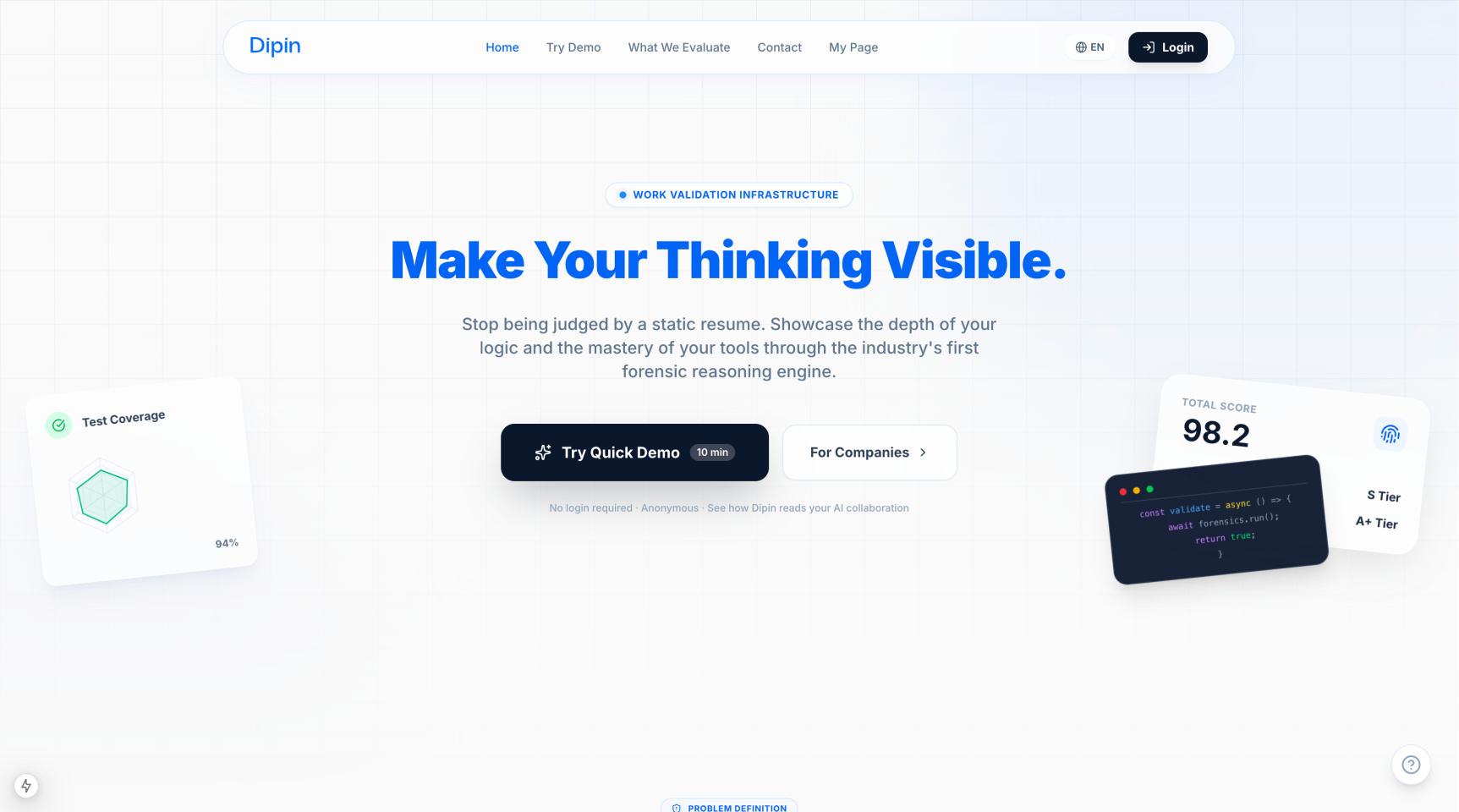
Product Walkthrough
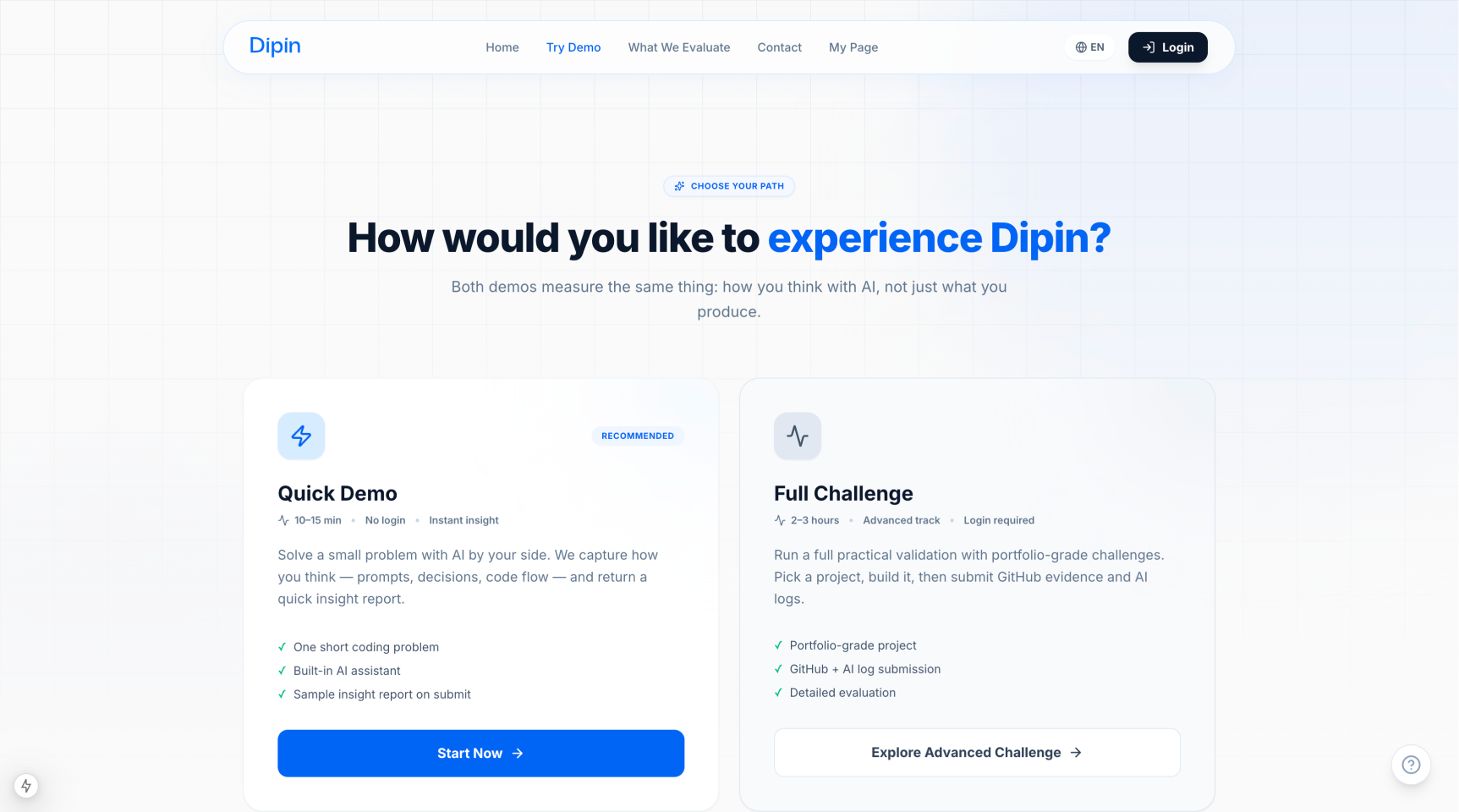
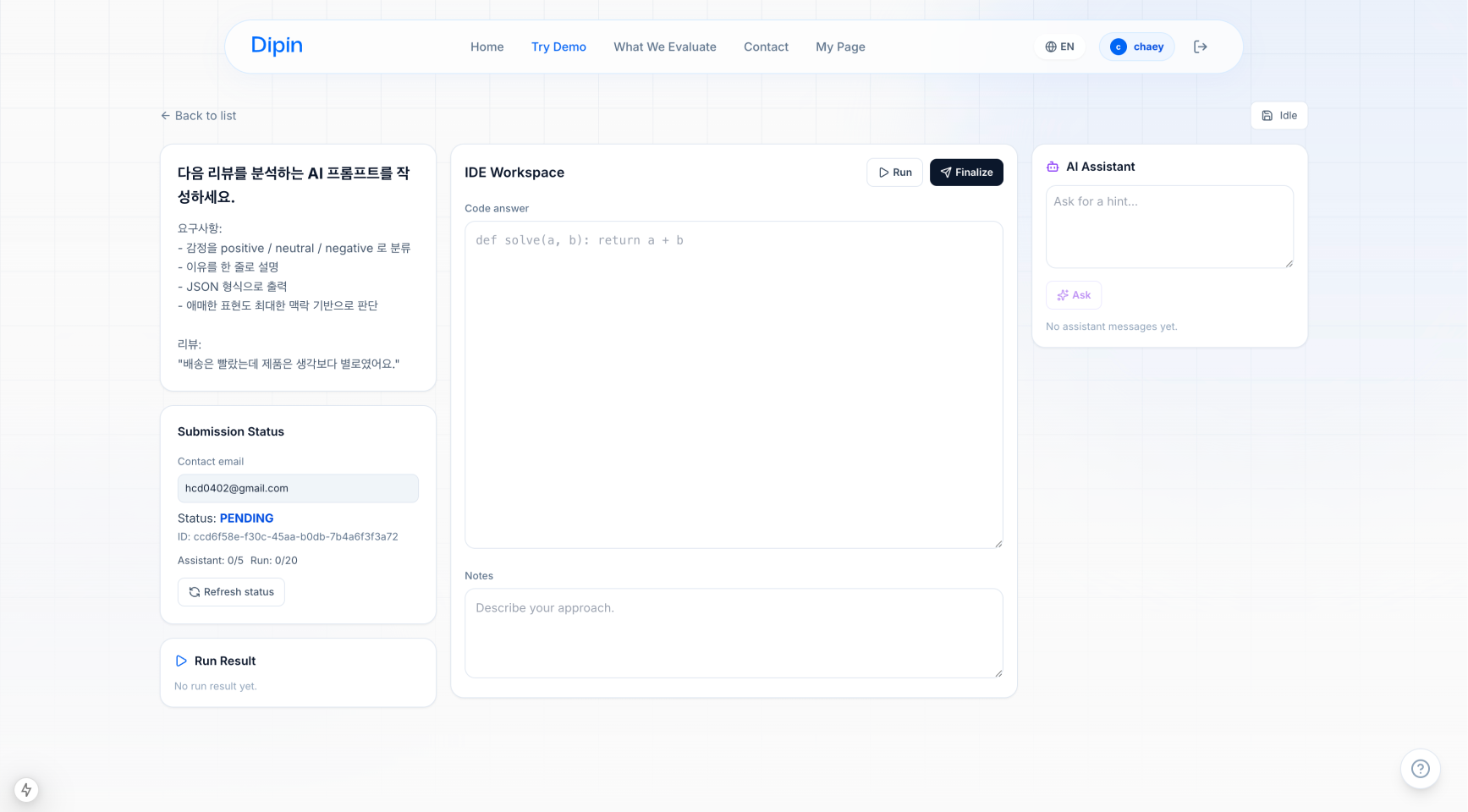
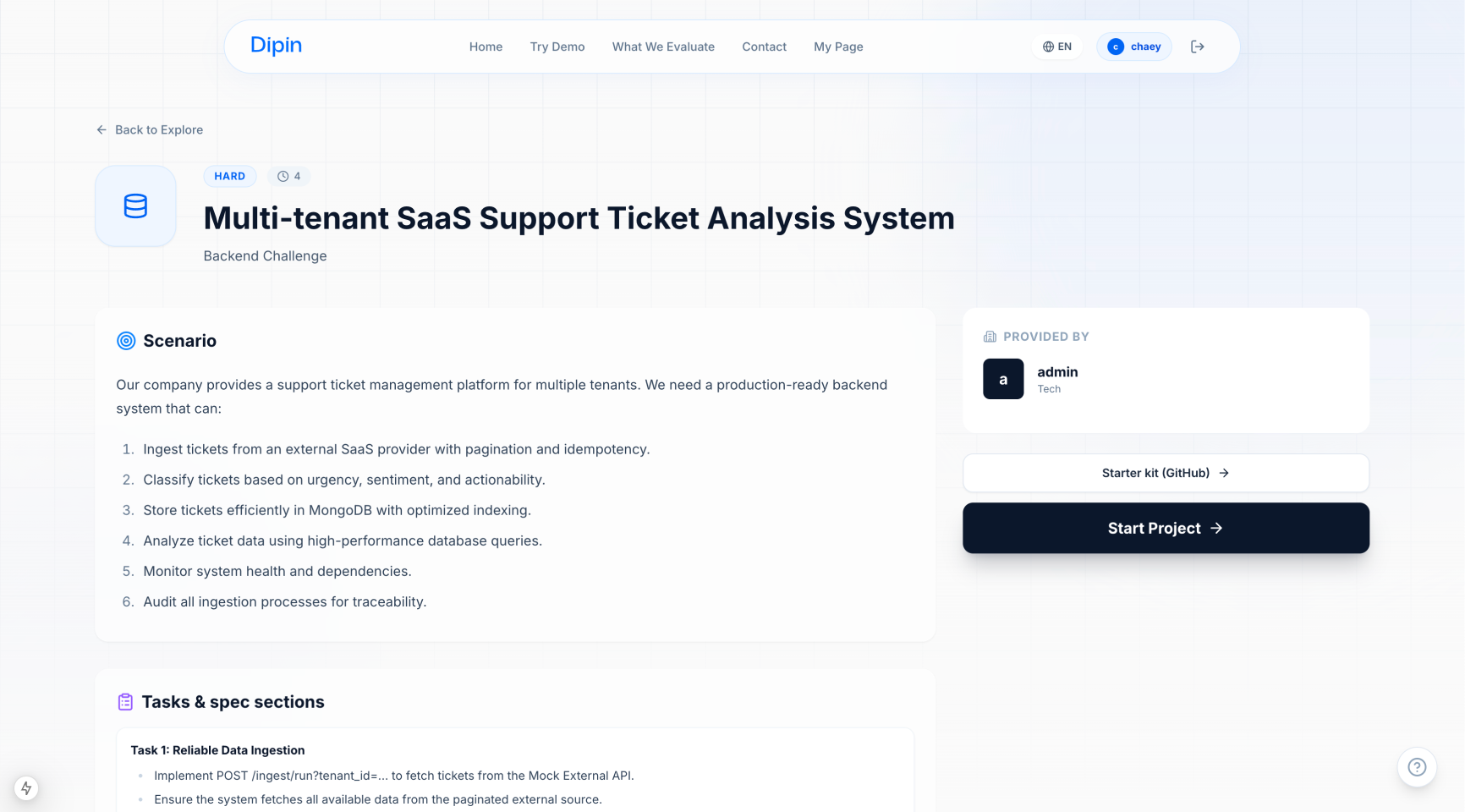
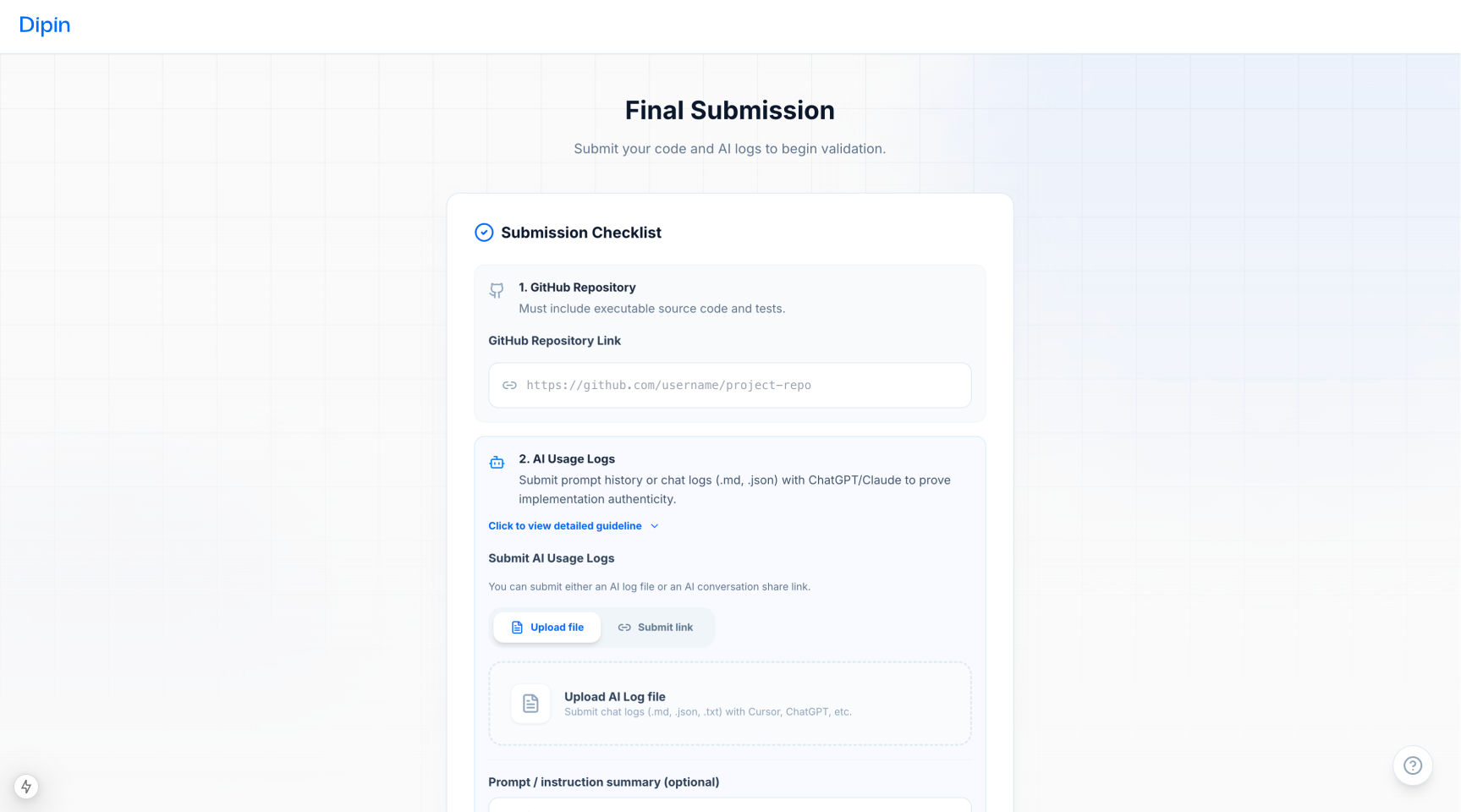
Key Features
- Scenario-based technical assessments
- Code submission and prompt log collection
- Candidate activity tracking
- AWS-based cloud deployment
- Secure authentication and data management
My Contributions
- Developed full-stack features using Next.js and FastAPI for candidate assessment workflows.
- Built RESTful APIs for handling code submissions, prompt logs, and user activity data.
- Deployed backend services on AWS using EC2, S3, API Gateway, and Docker.
- Designed and implemented database integration and backend services using Supabase.
- Leveraged AI development tools such as Cursor, Claude, and Gemini to accelerate implementation, debugging, and refactoring.
Challenges
- Designing a backend that reliably handled code submissions, prompt logs, and user activity data.
- Integrating multiple AWS services while keeping the backend architecture maintainable.
- Building and deploying a full-stack application within a limited development timeline.
What I Learned
- Gained hands-on experience building a full-stack web application with Next.js, FastAPI, and Supabase.
- Learned how to deploy and operate backend services on AWS using Docker, EC2, S3, and API Gateway.
- Improved my understanding of RESTful API design and backend architecture for data-driven applications.
- Experienced how AI-assisted development tools can improve development productivity during implementation and refactoring.